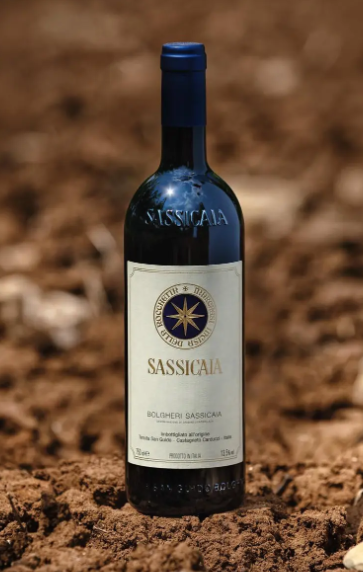
Super Tuscans. You’ve probably heard the name before…but what exactly are they?

No doubt, Italy is a land of wine, boasting an impressive collection and variety. But beyond Chianti and Brunello, another category has reached the status of icons: the Super Tuscans. These wines, born from innovation and a rebellious spirit, have redefined Italian winemaking. But what exactly are Super Tuscans? Why are they so sought after? And which bottles should you be adding to your cellar?
The Origins of Super Tuscans – A Revolution in the Vineyards
The story of Super Tuscans began in the 1970s when Italian wine laws were rigid and restrictive. In the 1960s, Italy introduced a series a regulations regarding wine production. The DOC (Denominazione di Origine Controllata) and DOCG (Denominazione di Origine Controllata e Garantita) regulations imposed strict rules, particularly regarding grapes. The wines had to primarily consist of Sangiovese grapes, with strict limitations on other varieties. Specifically, Chianti’s DOCG dictated that, in order to qualify as Chianti, the wine must comport no more than 70% of Sangiovese grapes and a minimum of 10% of a local grape. Italian regulators prohibited wines that did not comply from using the Chianti name and classified them as vino da tavola—Italy’s lowest classification.
Frustrated, winemakers started to experiment with non-indigenous grapes and innovative techniques. In particular, some visionary Tuscan winemakers believed that incorporating international grapes like Cabernet Sauvignon, Merlot, and Cabernet Franc could elevate the quality of their wines. And they were right.One of the pioneers was Marchese Mario Incisa della Rocchetta, who, in 1944, planted Cabernet Sauvignon vines at his Tenuta San Guido estate in Bolgheri. This led to the creation of Sassicaia, a wine meant only for the marchese’s personal consumption, and the 1968 vintage was commercially released in 1971.
Although the wine had to be labeled vino da tavola, it was an immediate hit, with some critics calling it a vino da favola (a fairy-tale wine). Sassicaia’s success inspired other producers to craft wines outside traditional classifications and experiment with foreign grapes. Another big success was Tignanello, which followed in 1978. And soon, the exceptional quality of these wines quickly garnered attention, and the term “Super Tuscan” emerged, signifying their superiority.
(For more about the history of Super Tuscan, see Rebels without a cause? The demise of Super Tuscans (2009) pdf).

Characteristics – Bold, Complex, and Refined
Super Tuscans are not defined by a specific region or blend but rather by their quality and the use of non-traditional grape varieties. These often include international varieties such as Cabernet Sauvignon, Merlot, and Syrah, either alone or combined with indigenous grapes like Sangiovese.
This approach allows winemakers the freedom to craft a wide range of wines with unique profiles, free from the constraints of traditional DOC regulations. Nonetheless, some characteristics remain common:
- Grape Varieties: Primarily Cabernet Sauvignon, Merlot, Cabernet Franc, and Syrah, often blended with Sangiovese.
- Oak Aging: Typically, Super Tuscans are aged in French oak barrels to enhance their depth and aging potential.
- Full-Bodied and Rich: They are known for their intense aromas and flavors, with notes of dark fruit, spice, and earthy undertones.
- High Tannins and Acidity: They tend to have high tannins and acidity, which provide a robust structure and aging potential.
- Complex Flavors: Expect notes of blackcurrant, blackberry, plum, cedar, tobacco, and vanilla.
Technically, many of the Super Tuscans are actually Bordeaux blends as they are a combination of grapes typical for Bordeaux: Cabernet Sauvignon, Merlot, and Cabernet Franc. For more about Bordeaux blends see The Bordeaux Blends).
Famous Super Tuscan Wines – Icons of Italian Winemaking
Several Super Tuscan wines have achieved legendary status, becoming coveted collectibles.

Sassicaia (Tenuta San Guido): Produced by Tenuta San Guido, Sassicaia is considered the original Super Tuscan. It is predominantly Cabernet Sauvignon with a touch of Cabernet Franc. This wine is known for its elegance, complexity, and exceptional aging potential. Its 1972 vintage famously outperformed several esteemed Bordeaux wines in a 1978 blind tasting, cementing its reputation. Review: Review: Deep ruby color, aromas of blackcurrant, cedar, and tobacco. Powerful tannins, balanced acidity, and a long, lingering finish.
Tignanello (Antinori): Crafted by Marchesi Antinori, Tignanello was first released in 1971. It blends Sangiovese with Cabernet Sauvignon and Cabernet Franc. Tignanello was groundbreaking for omitting white grapes from the blend and introducing small oak barrel aging in Tuscany.
Review: Ruby red, notes of ripe red fruit, vanilla, and spice. Well-structured with smooth tannins and a vibrant acidity.
Photo credit: Marchesi Antinori, Tignanello


Solaia (Antinori): Another gem from Marchesi Antinori, Solaia is crafted from Cabernet Sauvignon, Sangiovese, and Cabernet Franc. It showcases rich flavors and a robust structure, reflecting the potential of non-traditional blends in Tuscany.
Review: Intense ruby red colors, aromas of black fruit, chocolate, and balsamic. Full-bodied with firm tannins and a long, elegant finish.
Photo credit: Marchesi Antinori, Solaia
Ornellaia (Tenuta dell’Ornellaia): Established by Lodovico Antinori in Bolgheri, Ornellaia is a Bordeaux-style blend. This Super Tuscan features Cabernet Sauvignon, Merlot, and Cabernet Franc. Ornellaia has become one of Italy’s most esteemed wines known for its elegance, finesse, and velvety texture. Review: Deep ruby color, notes of blackberry, cassis, and spice. Silky tannins, balanced acidity, and a harmonious finish.
Credit: Ornellaia, (Ornellaia 2021)

Super Tuscans Today
Today, Super Tuscans have earned their place among the world’s finest wines and have consistently received high praise from critics and wine enthusiasts worldwide. Their success has also led to changes in Italian wine regulations. The creation of the IGT (Indicazione Geografica Tipica) classification provided a more suitable designation for these wines, acknowledging their quality and unique character. The Bolgheri DOC, created in 1994, gave Sassicaia and other wines from the Bolgheri area their own designation, qualifying for DOC or DOCG status and acknowledging their quality and significance.


Leave a Reply